The viral AI scenarios and the corporate manifestos are, on their own terms, serious pieces of futures work. They also share a blind spot so consistent that it stops looking like an oversight and starts looking like a worldview: the planet never gets a vote.
The promise
Meta's new manifesto is titled "The Future is for Everyone." It promises that "the abundance of the future can be shared by everyone": personal superintelligence working around the clock on your health, your finances, your ideas. Energy appears as something Meta will simply handle ("We help keep electricity prices low by building our own energy-generating infrastructure wherever we invest"), and water as a pledge to be water-positive by 2030. Read the whole page and you will not find a sentence in which the planet sets a limit on any of it.
That would be easy to dismiss as marketing, except the serious scenario work makes the same move with more rigor. Over the past year I have read the three viral AI scenarios closely, supplements and footnotes included: AI 2027, which set the genre's template in spring 2025; Europe 2031, the Brussels answer that policy circles passed around all summer; and AI 2040 ("Plan A"), the AI 2027 team's follow-up, which is not a prediction but a recommendation to slow the race down and delay superintelligence to 2040. Together with the corporate manifestos, these are the futures our tech leaders are writing for the rest of us.
The receipts
I ran the checks properly (full texts, every supplement, counts verified against the canonical PDFs), because a claim like this dies fast in a comment section if it is sloppy.
AI 2027 runs to more than 130,000 words across its narrative, both endings, and five research supplements. The words climate, carbon, and emissions appear zero times. Water as a physical resource: also zero; every "water" in the text is an idiom or a metaphor. Energy is everywhere, but only ever as gigawatts feeding datacenters, an input that will be solved for. And in the one place a physical limit could have affected the story, the authors raise it themselves and casually wave it away: the robot economy keeps doubling "so long as it didn't start to run out of raw materials", which they don't expect, because there will be "undersea mining robots that strip-mine the seabed for rare minerals". The planet and its physical boundaries are always second in priority: wreckage in the doom ending, or something that will be solved.
Europe 2031 spends roughly 25,000 words on how Europe builds almost 21 gigawatts of compute by 2031. Climate as a concern appears in exactly one sentence, as a protest group: "Climate groups worry about data centres' energy use; unions worry about jobs." Clean power does feature, but as a competitive asset in the sovereignty race – Macron selling French nuclear with "plug, baby, plug" – never as a constraint with a say in the plot.
AI 2040 is the most interesting, because it is literally a slowdown plan, a preferred scenario, and it never slows for the planet. It slows for alignment, for concentration of power, for geopolitics. Its authors know what is at stake; a footnote concedes that "the environmental impact of AI over the next decade or two will be enormous, and that unrestrained growth would literally boil the oceans." And where does that enormous impact get handled? Not in the main narrative, where water surfaces once, as a complaint Congress hears (the same footnote calls today's water concerns "largely overstated"). It gets handled in an appendix to the economics supplement, by assumption.
Scenario
Length
What bites in the plot
The planet's causal weight
AI 2027 (Apr 2025)
130,000+ words
Compute and chips
Zero. Climate, carbon, emissions: 0 mentions
Europe 2031 (Jun 2026)
~25,000 words
EUV supply, energy as asset
One sentence, as a protest group
AI 2040 "Plan A" (Jul 2026)
90 pages + supplements
Verified compute, fabs
A footnote and an appendix
TERM COUNTS AND QUOTES VERIFIED AGAINST THE CANONICAL PDFS, JUL 2026
Here is the tell that this is a pattern and not an accident: these futures know perfectly well how to model a physical limit. In both 2026 scenarios, one hard constraint shapes the entire plot, and it is fabrication capacity for chip supply chains, modeled in loving detail. Chips are scarce in these scenarios; the planet isn't.
The god from the machine
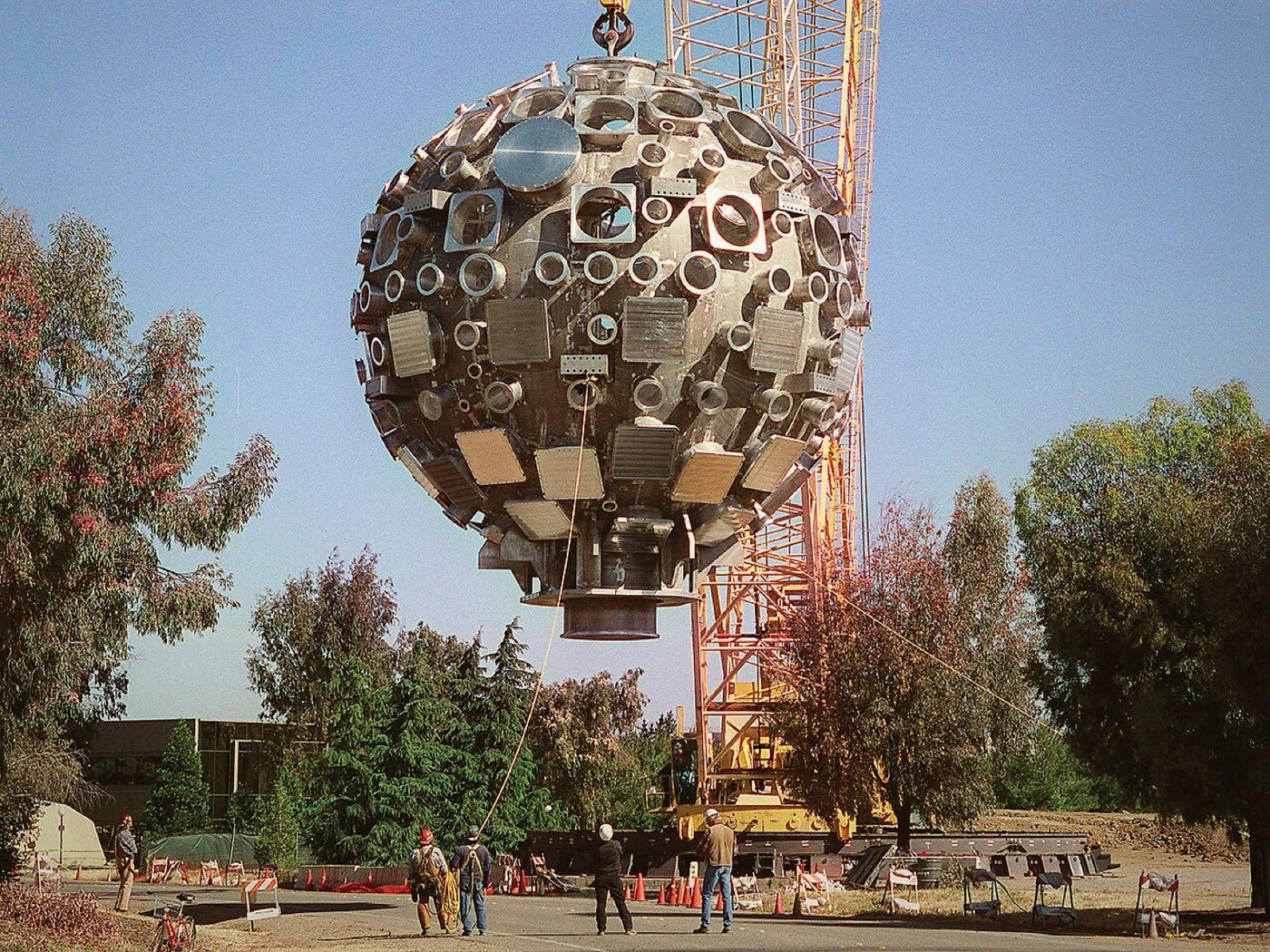
In Greek theatre, when a plot had tangled itself beyond saving, a crane lowered an actor playing a god onto the stage to resolve it. The device was named deus ex machina, god from the machine, and the machine in question was the crane. Watch how AI 2040 escapes its own energy math and you can see the crane working. In its model, global energy use rises roughly eightfold by 2040; run that on fossil fuels and the scenario's own calculation lands at a +3.0°C world. So the gods descend, one assumption at a time: direct air capture assumed to fall from $600 billion to $30 billion per gigatonne, a twentyfold cost decline, funded by an $85 trillion subsidy.
THE GOD ARRIVES BY CRANE: THE NATIONAL IGNITION FACILITY'S TARGET CHAMBER, LIVERMORE, 1999. PHOTO: LAWRENCE LIVERMORE NATIONAL SECURITY, CC BY-SA 3.0
Futures written by engineers
The easy story is that tech leaders don't care, and I don't think it is true. The better explanation is that these are futures written by engineers, inside the engineering paradigm, and that paradigm has earned its confidence honestly. A century and a half of sending problems to the invention desk and watching them get solved has trained all of us, not just scenario authors, to assume the next constraint will be solved too. Donella Meadows made the general point decades ago: the deepest leverage in any system sits in its paradigm, the shared idea underneath everything else. The paradigm underneath these futures is that every constraint is an engineering problem in disguise.
The three gates
So what does abundance actually wait on? Strip the promise down to its physical prerequisites and I count three gates. They map onto physics rather than politics: energy in, waste out, matter back in.
Gate 1Energy in
Clean energy
The abundance futures are energy-hungry; AI 2040's own model has global energy use rising roughly eightfold by 2040. That energy exists cleanly, built as generation, grids, and storage at a pace we have never achieved, or the future doesn't exist.
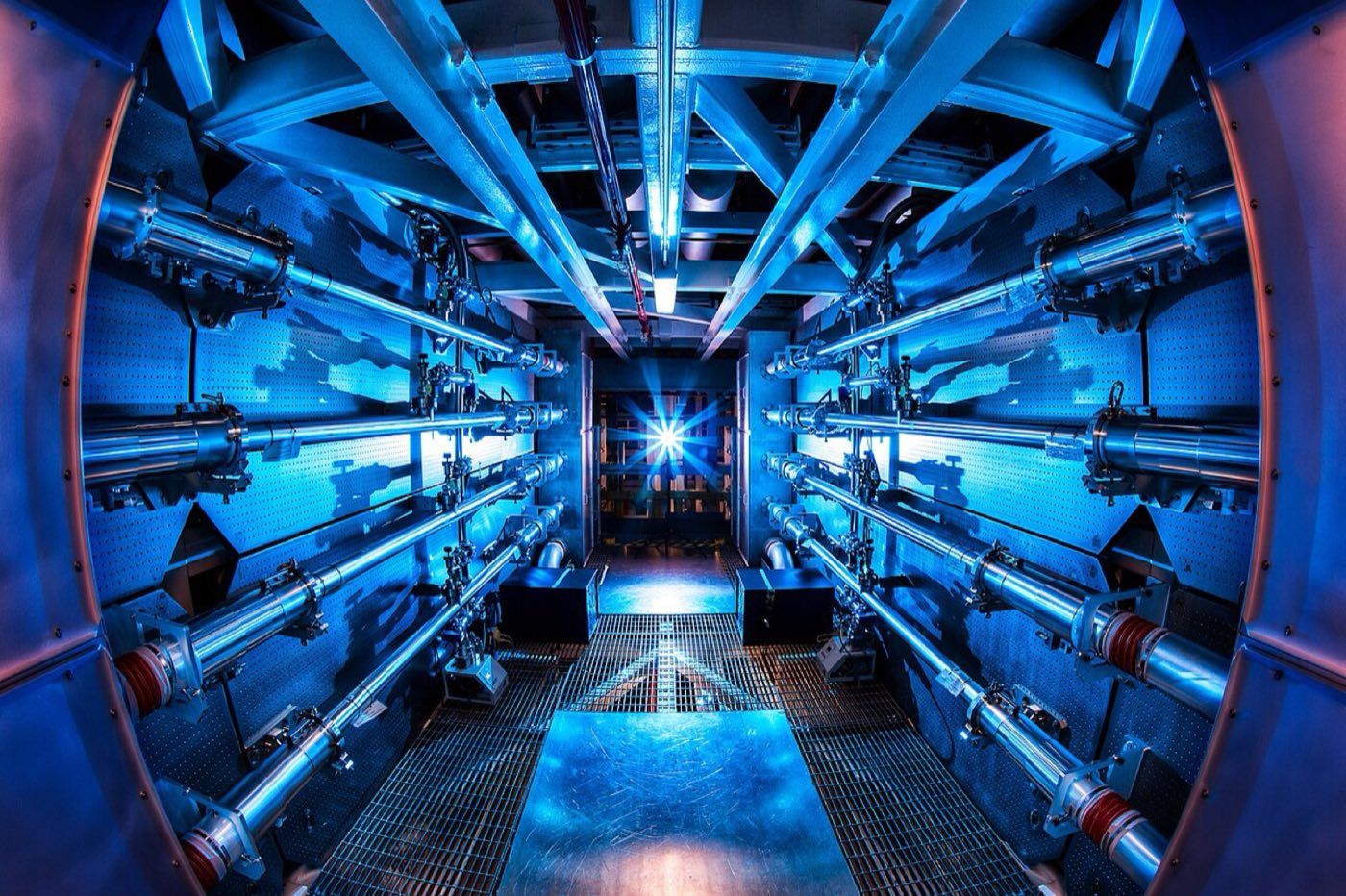
THE BET → FUSION
Ignition achieved once, at target level (2022); no fusion watt has ever reached a grid, and the field's own target for first grid electrons is the early 2030s. Microsoft has pre-bought fusion power for end-2028 from a plant still under construction. The bet that already works, solar plus storage, is bottlenecked by deployment and grids, not invention.
STATUS AUG 2026
Gate 2Waste out
Carbon removal
The carbon budget is nearly spent before the buildout starts. Gigatonne-scale removal is an unsolved industrial problem wrapped inside an unsolved political one, because even when the machines work, someone has to pay for them. An $85 trillion subsidy is not an engineering detail.
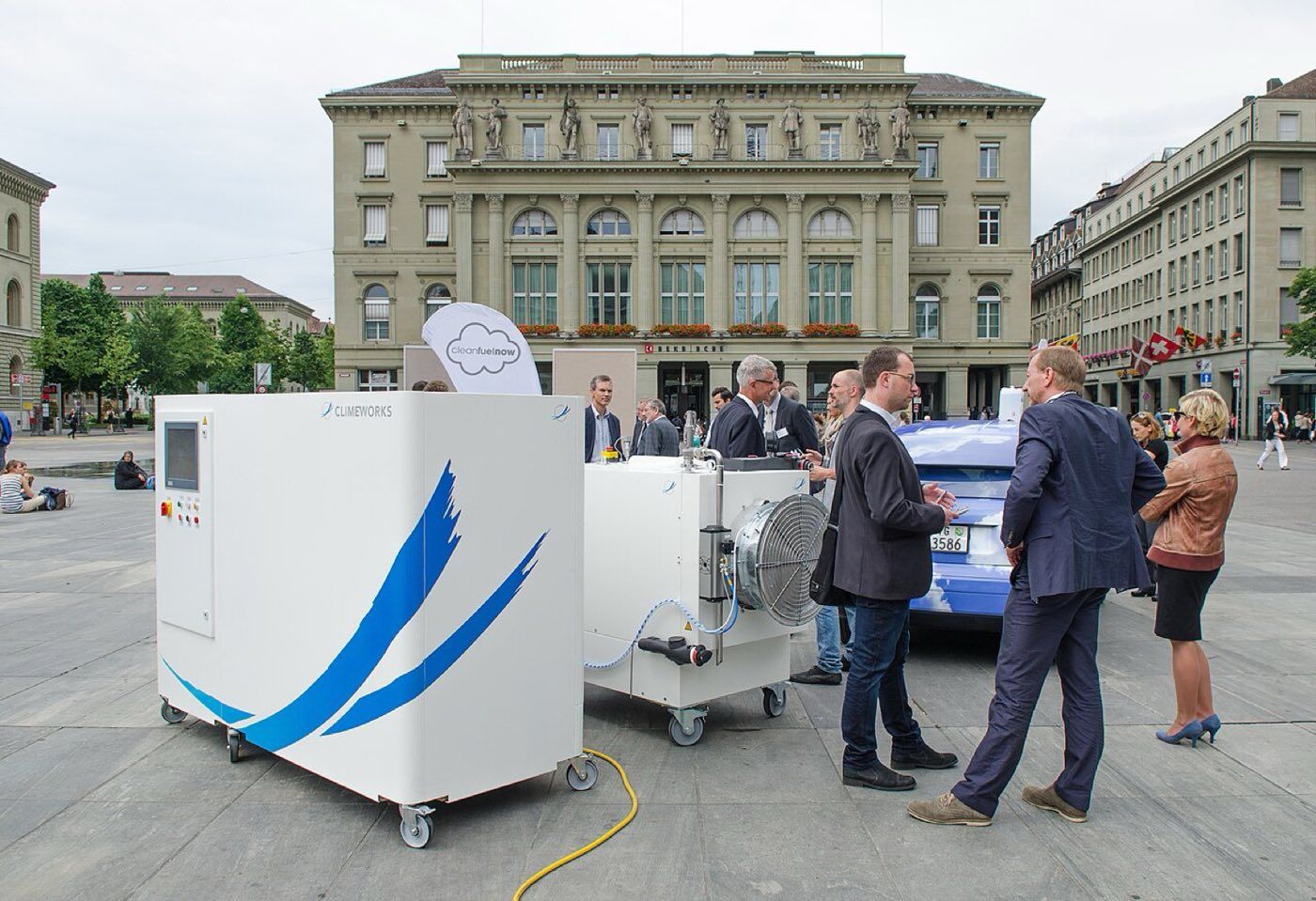
THE BET → DIRECT AIR CAPTURE
The largest operating plant, nameplate 36,000 tonnes a year, captured about 105 tonnes in its first ten months of phased ramp-up. Suppliers currently price durable removal around $670 a tonne, against the ~$30 the scenarios assume, and the next flagship plant has slipped to 2027.
STATUS AUG 2026
Gate 3Matter back in
Circularity
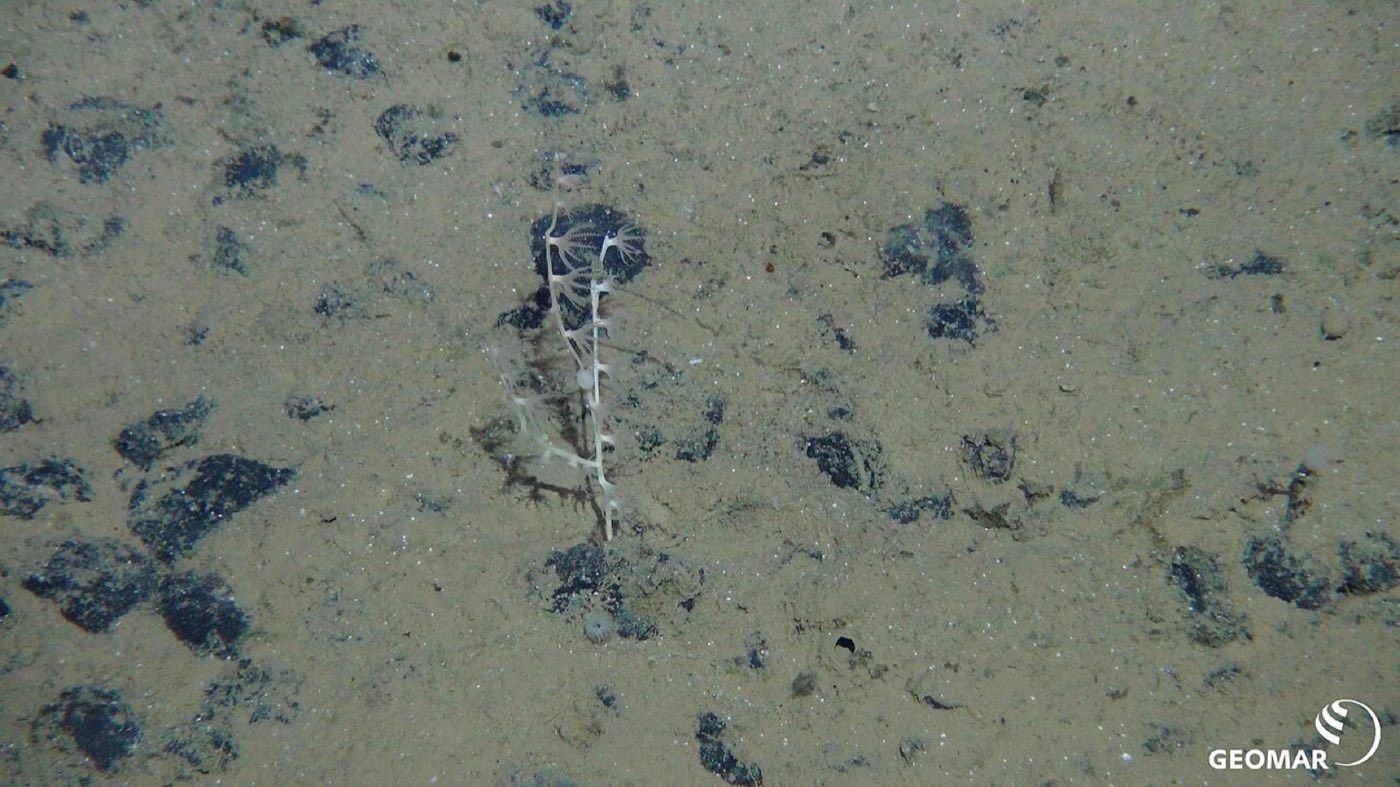
Every datacenter, panel, and robot is matter that must come from somewhere and go somewhere. The current plan on record is strip-mining the seabed. A future that cannot cycle its materials is not abundant; it is extracting on borrowed time.
THE BET → NOBODY'S MOONSHOT
Battery recycling's would-be flagship went bankrupt in 2025; the survivor now grows by powering AI datacenters with second-life batteries. The world is 6.9% circular and falling, the UN expects the e-waste recycling rate to drop to 20% by 2030, and the first US commercial seabed-mining permit is expected in 2027.
STATUS AUG 2026
PHOTOS: NIF PREAMPLIFIERS, LLNL, CC BY-SA 3.0 · CLIMEWORKS DEMONSTRATOR, BERN 2015, TRX340, CC BY-SA 4.0 · NODULE FIELD, CLARION-CLIPPERTON ZONE, ROV KIEL 6000 / GEOMAR, CC BY 4.0
Read the three status lines together and the scoreboard, as of August 2026, is this: the energy bet has produced ignition but not one grid watt; the carbon bet sells removal at more than twenty times the price the scenarios assume; and the circularity numbers are moving backwards by the UN's own projection. None of this means the gods will not descend. It means no honest plan gets to schedule them.
Solve these three and the abundance stories become plausible. Assume them, and the stories are theatre. And notice that none of the three is purely an engineering problem; they are budget, allocation, and coordination problems with engineering inside them, which may be exactly why the scenarios route around them.
Pax terra, not pax machina
AFTER THE "NATURE POSITIVE" NESTED MODEL; TECHNOLOGY RING ADDED, PAX MACHINA INVERSION OURS
The old sustainability diagram drew economy, society, and environment as three overlapping circles with a sweet spot in the middle, as if the planet were one stakeholder among three, available for negotiation. The corrected version nests them: the economy operates inside society, society inside the planet, and technology, the innermost ring, inside all of it. Nothing in an inner ring can outgrow the ring that contains it, and the outermost ring does not negotiate.
The futures our tech leaders are writing run on the first diagram, or more honestly on the middle one, where technology is the outermost ring and everything else is expected to adjust. The peace they offer is pax machina: abundance on the machine's terms, delivered by a god from the machine, with the planet as terrain. Rome had a name for an arrangement like that, and Pax Romana was real peace, of a kind, on Rome's terms entirely.
I named this studio Pax Terra because I believe the order runs the other way. Peace on the planet's terms is the premier design problem of this century, the one every other problem nests inside, and a future that has not reckoned with its outermost ring is not yet a future; it is a wish with a supply chain. The three gates are where that reckoning starts.
This critique is part of AI Futures, Paxterra's ongoing inquiry into artificial intelligence as a system. Part 1 maps the current system; Part 2 sketches AI as a public utility. If you are working on futures where the planet holds a vote, in strategy, policy, or scenario work, I would genuinely like to compare notes. Drop me a message.
SOURCES
ai-2027.com · Kokotajlo, Alexander, Larsen, Lifland, Dean (Apr 2025)
europe2031.ai · Juijn, van Baarsen, Dada et al. (Jun 2026)
ai-2040.com · AI Futures Project, "Plan A" (Jul 2026), incl. the economics supplement, Appendix B
npj Climate Action 5:71 · Alpine, Geldner, Alpine, Chepeliev, "AI-driven productivity gains enable more CO₂ emissions than they avoid" (Aug 2026)
IMF Working Paper WP/26/157 · Oman, Espagne, Fressoz, "The Generalized Jevons Paradox and the Future of Energy" (Jul 2026); views the authors', not the Fund's
RESEARCH AND VERIFICATION RUNS DONE WITH CLAUDE (ANTHROPIC). EVERY COUNT AND QUOTE CHECKED AGAINST THE CANONICAL PDFS AND PRIMARY SOURCES.